
In recent years, BDSM (Bondage, Discipline, Dominance, Submission, Sadism, and Masochism) has gained more visibility in mainstream media and culture. However, alongside this visibility comes misconceptions and misunderstandings, particularly when it comes to distinguishing between BDSM and abusive behavior. It’s crucial to shed light on this topic to promote informed consent and healthy relationships within the BDSM community and beyond.
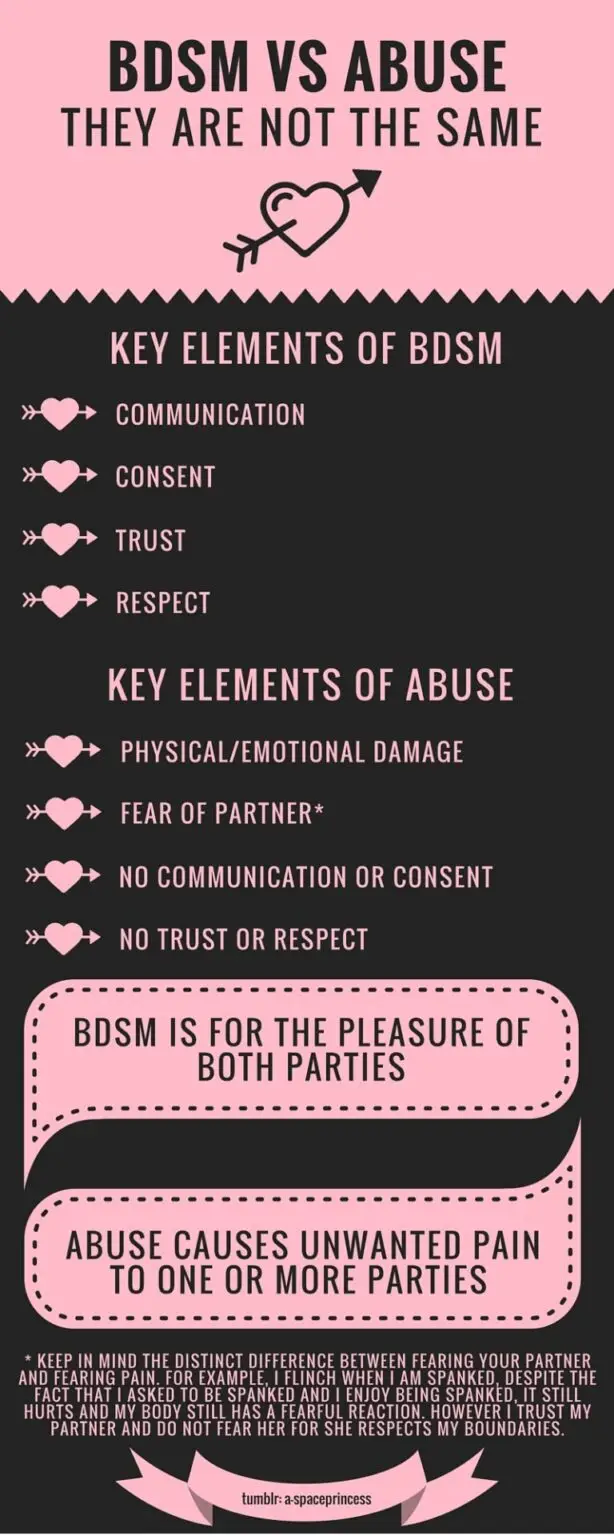
First and foremost, it’s essential to understand that BDSM is rooted in the principles of trust, communication, and mutual consent. At its core, BDSM involves consensual exploration of power dynamics, sexual practices, and fantasies. Participants willingly engage in activities that may involve bondage, role-playing, sensation play, and more, all with the explicit agreement of all parties involved.
Consent is the cornerstone of BDSM. Unlike abuse, where power is wielded to manipulate or coerce another person, BDSM activities are negotiated and agreed upon by all participants. Consent in BDSM goes beyond a mere “yes” or “no.” It requires ongoing communication, a clear understanding of boundaries, and respect for each person’s limits. This means that consent can be revoked at any time, and any activity must stop immediately if one party feels uncomfortable or unsafe.
Furthermore, BDSM practitioners often establish safe words or signals to communicate boundaries during play. These safe words serve as a crucial tool for maintaining consent and ensuring that all parties feel empowered to express their needs and preferences. If a safe word is spoken or signaled, it is a clear indication to stop the activity and check in with each other.
In contrast, abuse is characterized by a lack of consent and a disregard for the well-being of the other person. It involves the exertion of power and control over another individual without their consent, often resulting in physical, emotional, or psychological harm. Unlike BDSM, where activities are mutually agreed upon and negotiated, abuse is unilateral and driven by the abuser’s desire for dominance and control.
It’s important to note that the line between BDSM and abuse can sometimes blur, especially for those who are new to the community or unfamiliar with its practices. This is why education, communication, and community support are vital. BDSM practitioners emphasize the importance of ongoing dialogue, self-awareness, and self-reflection to ensure that all interactions are consensual and respectful.
If you’re exploring BDSM or engaging in BDSM activities, it’s essential to prioritize safety, communication, and mutual respect. Take the time to educate yourself about consent, negotiation, and risk-aware kink practices. Seek out resources, workshops, and communities where you can learn from experienced practitioners and build supportive connections.
If you ever find yourself in a situation where you feel uncomfortable, unsafe, or unsure, don’t hesitate to reach out for support. Trust your instincts, and remember that you have the right to set boundaries and prioritize your well-being. By fostering a culture of consent, respect, and understanding, we can create safer and more inclusive spaces for everyone, both within the BDSM community and beyond.